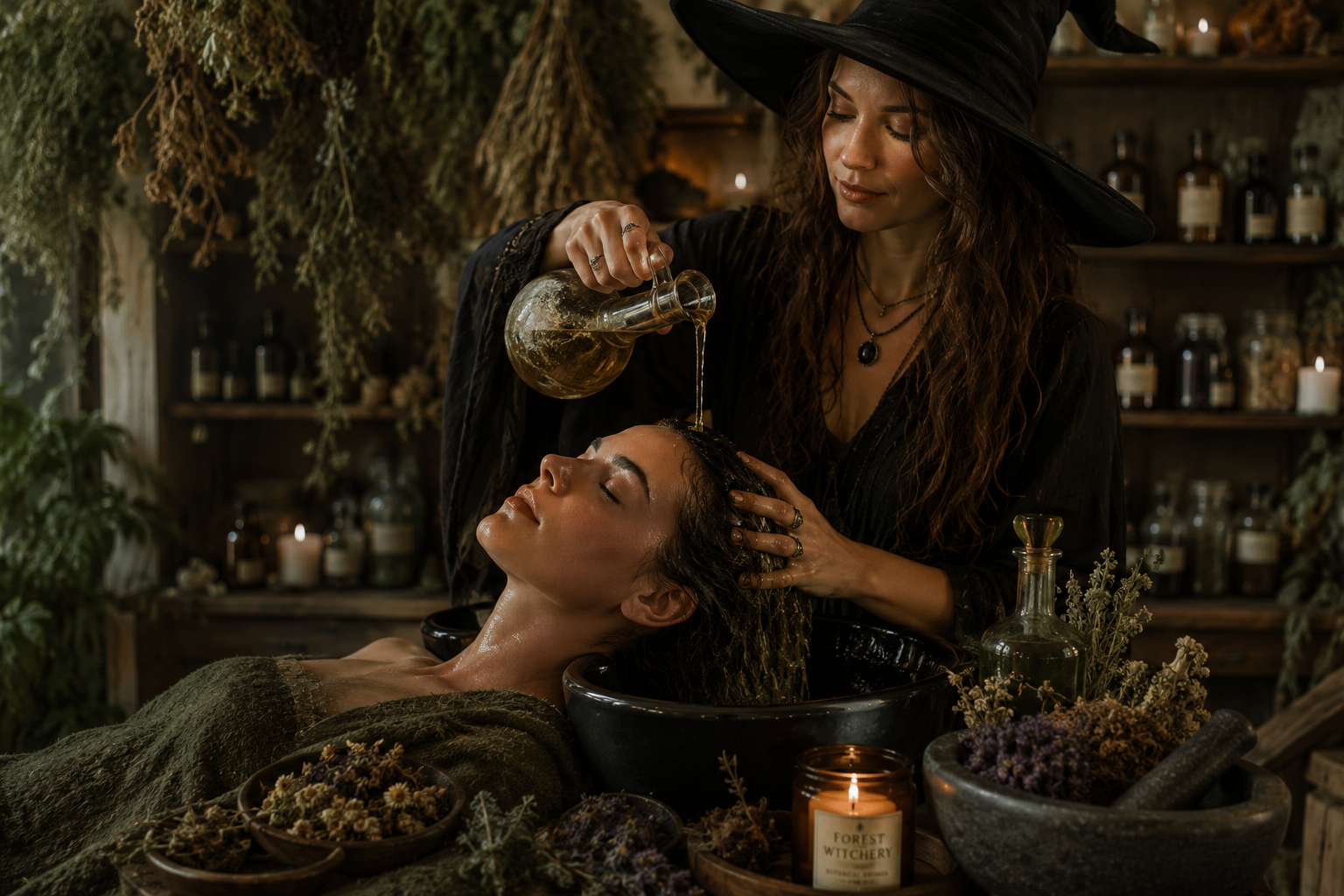
There is something strangely easy to forget about beauty: it was never meant to live entirely inside a bottle.
For most of human history, care was shaped by touch, water, plants, fragrance, repetition and time. Hair was brushed slowly. Oils were warmed between the hands. Herbs were steeped, strained and poured. Skin was softened with steam, milk, flowers, clay, salt and honey. These practices changed across landscapes and generations, but they shared something important. Beauty was experienced as an act, rather than purchased as a finished result.
Modern life has made beauty faster. Shampoo, rinse, dry, leave. Appointments are squeezed between errands. Products promise visible change in minutes. There is convenience in that, of course, but something sensory has slipped away. We have become very good at completing the task and less familiar with inhabiting the moment.
Perhaps this is why ritual beauty is returning.
Add Your Heading Text Here
The Japanese Head Spa
The rise of the Japanese head spa offers a beautiful example of this shift.
A head spa is centred around the scalp and hair, usually bringing together cleansing, massage, water and conditioning treatments. Depending on the setting, it may also include steam, scalp assessment, exfoliation, aromatic products or work around the neck and shoulders. The exact experience varies, but the scalp is given far more attention than it usually receives during an ordinary salon visit.
There is a quiet brilliance in placing the scalp at the centre of a treatment. It is an area of the body that carries tension, supports the hair and is touched constantly without often being properly cared for. We brush over it, cover it with products and rush through washing it, yet a slow scalp massage can feel astonishingly comforting.

Beauty That Leaves a Memory
The return of ritual beauty suggests that people are searching for more than efficiency.
A treatment can cleanse the scalp, soften the skin or condition the hair, but it can also change the feeling of an afternoon. It can create stillness where there was none. It can reconnect a familiar beauty practice with water, fragrance, plants and human touch.
Japanese head spa has become one of the clearest symbols of this movement because it transforms something universally familiar. Nearly everyone knows the feeling of washing their hair. Far fewer have experienced it as a slow, immersive treatment.
That transformation holds the real fascination.
Ritual beauty does not ask everyday care to become grand or theatrical. It simply invites us to notice what is already there: the warmth of water, the scent of crushed leaves, the weight of wet hair, the movement of hands and the quiet shift that happens when nothing is rushed.
Somewhere within those details, beauty begins to feel alive again.
Add Your Heading Text Here
Why Head Spa Has Travelled So Far
Japanese head spa treatments have travelled well beyond Japan and are now appearing in salons and wellness spaces across the world. Their popularity is partly visual. Water halos, rising steam, glossy hair and carefully arranged treatment rooms are wonderfully suited to film. Yet their appeal reaches further than how they look online.
They offer a rare combination of hair care and deep sensory attention.
People increasingly seek treatments that allow them to step away from noise, screens and constant conversation. A head spa creates a small world of its own. Water masks the sounds outside. The eyes close. There is nothing to hold, answer or organise. For an hour, the head is supported and cared for.
Beauty That Leaves a Memory
The return of ritual beauty suggests that people are searching for more than efficiency.
A treatment can cleanse the scalp, soften the skin or condition the hair, but it can also change the feeling of an afternoon. It can create stillness where there was none. It can reconnect a familiar beauty practice with water, fragrance, plants and human touch.
Japanese head spa has become one of the clearest symbols of this movement because it transforms something universally familiar. Nearly everyone knows the feeling of washing their hair. Far fewer have experienced it as a slow, immersive treatment.
That transformation holds the real fascination.
Ritual beauty does not ask everyday care to become grand or theatrical. It simply invites us to notice what is already there: the warmth of water, the scent of crushed leaves, the weight of wet hair, the movement of hands and the quiet shift that happens when nothing is rushed.
Somewhere within those details, beauty begins to feel alive again.